
Increase Your Odds of Success in This Difficult Exit Market
A Challenging Exit Environment for Private Equity
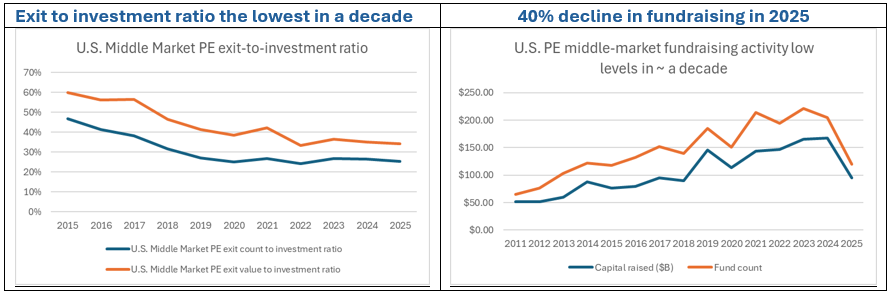
Recently published Pitchbook data highlights the challenging exit and fundraising environment facing U.S. middle-market private equity funds. As shown below,
- The PE exit-to-investment ratio has fallen to its lowest in a decade, signaling the difficulty private equity firms are having realizing returns and recycling capital.
- Fundraising declined by 40% in 2025, limiting the availability of new capital for new investments and increasing pressure on firms to generate liquidity from existing investments.
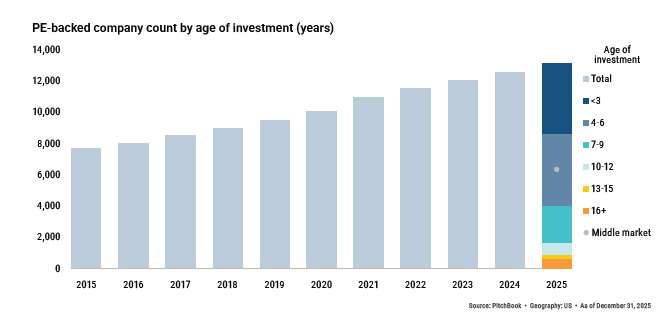
Aging PE portfolios
As a result of these trends, ~30% of PE-backed portfolio companies were purchased more than 7 years ago, with over 10% having been held for more than a decade. The continued rise in continuation vehicles is but one manifestation of this difficult exit market.
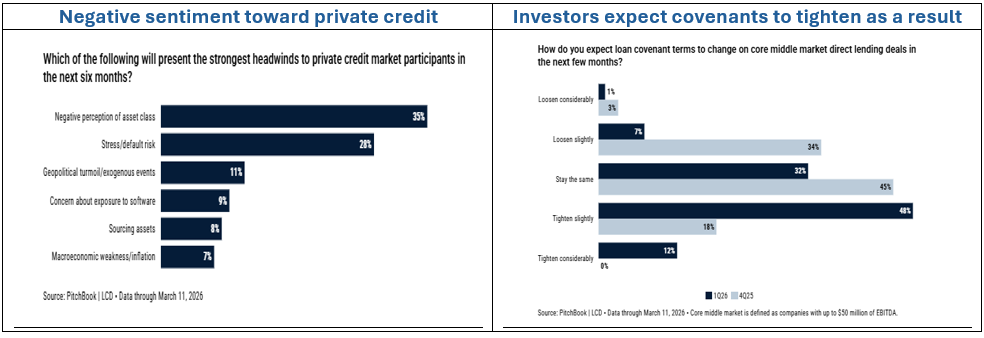
Negative Private Credit Sentiment
Most recently, negative sentiment toward the private credit market creates yet another headwind facing private equity exits, as tighter lending conditions would increase borrowing costs while reducing buyer flexibility and deal structuring options.
Challenging Food & Beverage fundamentals are a compounding factor
In the food and beverage market, industry trends are compounding the challenging overall exit environment. Despite what appears to be a ‘strong’ economy (trend-level GDP growth and low unemployment), U.S. consumer sentiment is at levels similar to the Great Recession. This weakness pressures demand, constraining growth and stressing margins.
At the same time, the increasing adoption of GLP-1 medications is impacting consumer behavior, particularly in categories tied to snacking and discretionary consumption. While the long-term impact is still unknown, this shift introduces additional uncertainty into seller’s volume forecasts.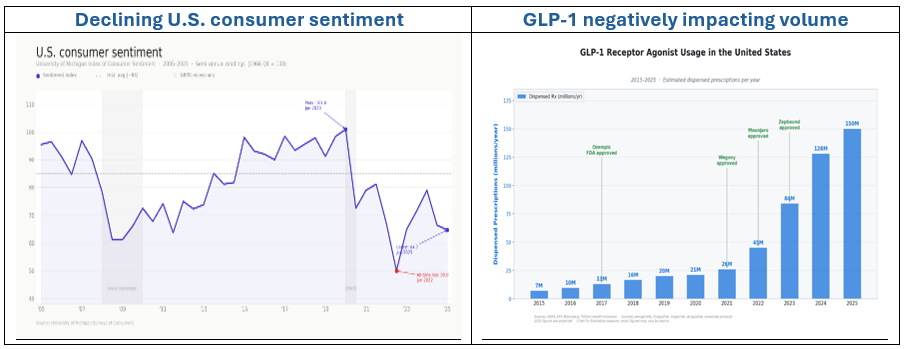
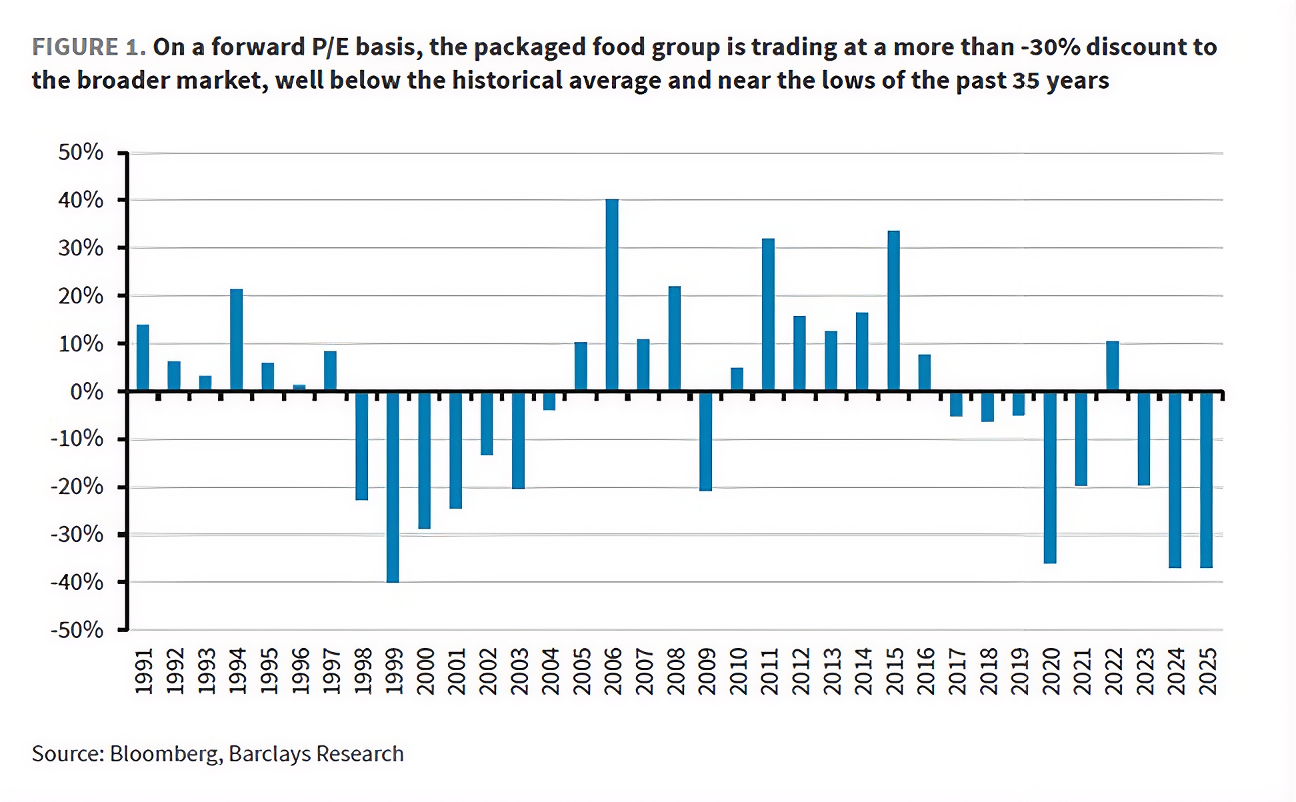
Valuations under pressure
These negative fundamentals have hit public Food & Beverage valuations hard, with valuations at or near 30-year lows relative to the market.
 Operational Exit Preparation is an Underused Differentiator
In low growth and difficult exit markets like today’s environment, the ability to clearly articulate a credible value creation story in exit processes becomes increasingly challenging and important.
To this end, Saphineia believes operational exit preparation is an underutilized lever in private equity strategy that can help increase the probability of exit success while reducing risk.
Saphineia is often called upon to conduct Operational Due Diligence on behalf of buyers. In this role, we see a large cross section of Confidential Information Memorandums (CIMs). Having reviewed probably hundreds of CIMs, one thing that stands out to us is how little, if any, of the seller’s sales pitch addresses value creation from operational improvement.
Uniformly, CIMs exhaustively detail why sales growth will accelerate, driving substantial margin expansion. Yet when it comes to operations, CIMs merely cite facts (e.g. size of plant, food safety certifications, latest SQF score, supplier concentration) and rarely, if ever, call out opportunities to improve efficiency or reduce risk.
This is a missed opportunity for sellers in our opinion, especially in the current environment.
Saphineia’s Operational Exit Prep
Saphineia’s Operational Exit Prep (“OEP”) service is a focused, exit assessment designed to help food & beverage manufacturers reduce risk, increase exit success and improve value capture. Specifically, it helps sellers:
- Identify and address operational red flags and table-stakes issues before buyers do
- Surface credible, quantifiable sources of value-creation to include in the CIM
- Develop clear answers to common buyer questions
- Reduce time required of the seller’s management team
- And, critically, reduce risk of broken sales processes
Importantly, Saphineia’s OEP service offers a fully customizable scope, which allows sellers to tailor the scope to the situation and key value drivers. Further, recognizing the high costs sellers already face (e.g. QoE, market study), Saphineia’s OEP service can be completed in phases to control investment.
Lastly, because the operational value creation story is rarely a focus of exit processes, Saphineia’s support can create real differentiation in competitive processes.
Interested in learning more?
If you’re interested in learning more about this service, please contact Craig Albert or Elliot Rothstein.